
.png)



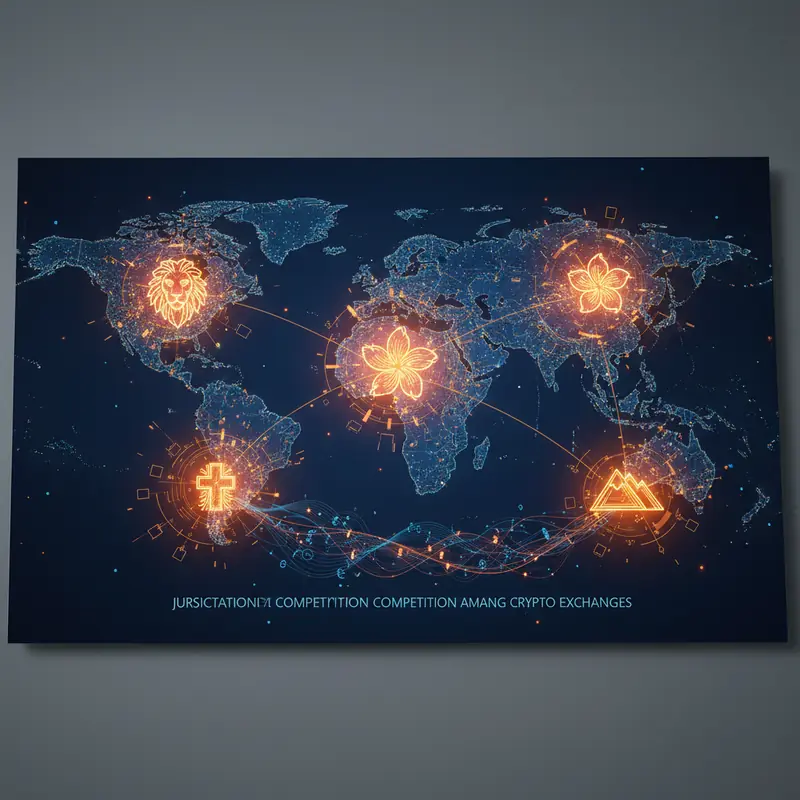
The competition between regional financial centres to attract licensed crypto exchange operations has intensified through 2025 and 2026, with Singapore, Hong Kong, Dubai, and Switzerland producing markedly different regulatory frameworks that shape where exchanges domicile their operations and serve their customers. The latest data from Chainalysis and the World Federation of Exchanges shows substantial concentration of regulated activity in these jurisdictions, with approximately 78 percent of compliant institutional crypto trading volume now flowing through licensed entities in these four locations.
Singapore's Monetary Authority has positioned the city-state as the most rigorous regulated crypto hub. The Payment Services Act licensing framework, supplemented by the new Single Currency Stablecoin regulation in mid-2026, creates a high but predictable bar for crypto operations. Major licensed entities include Coinhako, Independent Reserve, Crypto.com Singapore, and Bybit Singapore, all serving institutional and accredited retail customers under MAS oversight. Singapore's combination of clear regulation, strong banking infrastructure, and political stability has made it the default choice for Asia Pacific institutional crypto operations despite high compliance costs.
Hong Kong's Securities and Futures Commission has taken a more aggressive promotional stance toward crypto licensing. The HKMA's Virtual Asset Trading Platform regime, fully operational since 2024, has licensed a growing list of operators including HashKey Exchange, OSL Digital Securities, and several institutional-only platforms. Hong Kong's stamp duty exemption for tokenised securities trading and its proximity to Mainland Chinese capital markets have made it particularly attractive for institutional flow. The combined framework has captured meaningful share from Singapore for specific use cases.
For institutional and sophisticated retail traders evaluating where to maintain exchange relationships, the regulatory clarity of major Asian hubs increasingly matters. Trading platforms like Bybit operate under appropriate regulatory licensing across multiple Asia Pacific jurisdictions, ensuring compliance with local frameworks while providing the deep liquidity, derivatives, and copy-trading capabilities that institutional and active retail traders need. The platform's regulatory infrastructure works well for traders who want both regulatory comfort and access to sophisticated trading products.
Dubai's Virtual Assets Regulatory Authority has positioned the emirate as the most accessible regulated crypto hub. VARA's licensing framework, fully operational since 2023, has issued licenses to more than 30 major operators including Binance Dubai, OKX, Crypto.com, and Bybit. The regulatory approach prioritises commercial viability while maintaining consumer protection, producing a framework that's been notably welcoming to mid-sized operators that struggled with Singapore or Hong Kong's higher compliance costs. Dubai's tax incentives and lifestyle attractions have helped attract crypto talent seeking long-term operational presence.
Switzerland's Crypto Valley centred in Zug continues to host significant crypto activity, with the Swiss Financial Market Supervisory Authority operating one of the longest-established regulatory frameworks for digital assets. Sygnum, SEBA Bank (now AMINA Bank), and Bitcoin Suisse all maintain Swiss banking licenses with crypto-native business models. The Swiss approach has been particularly suited to private banking and wealth management firms expanding into digital assets, with Swiss legal traditions around banking secrecy and asset protection translating well into the crypto context.
The regulatory frameworks produce meaningfully different operational obligations. Singapore-licensed entities must maintain strict segregation of customer assets, undergo regular audit, comply with detailed travel rule requirements, and maintain Singapore-resident management. Hong Kong frameworks require similar customer protection measures plus additional cybersecurity standards for institutional platforms. Dubai's framework focuses on operational risk management and consumer protection without the same intensity of asset segregation requirements. Swiss frameworks emphasise capital adequacy and operational risk management consistent with Swiss banking traditions.
US regulatory frameworks remain meaningfully different from these international hubs. The SEC, CFTC, and state-level regulators produce a fragmented compliance landscape that has driven many major crypto operators to focus international expansion outside the US first. Coinbase remains the dominant US-licensed exchange but has also invested heavily in international operations. Kraken's US presence is meaningful but its international operations through Ireland and Australia provide alternative jurisdictions for non-US customers. Gemini operates primarily in the US with licensing complications that have constrained its growth.
European frameworks under MiCA produce yet another regulatory model. EU-licensed crypto exchanges must comply with detailed asset segregation, capital adequacy, customer protection, and governance requirements that closely mirror banking regulation. Coinbase Europe operates through an Ireland subsidiary, Kraken's German entity provides EU services, and Bitstamp's Luxembourg base serves European customers. The EU framework has consolidated regulated crypto activity into fewer, larger operators while pushing smaller players out of European operations entirely.
Cross-border regulatory coordination has improved meaningfully through 2025 and 2026. The International Organization of Securities Commissions has facilitated information sharing and coordination among crypto regulators across major jurisdictions. The Financial Stability Board's crypto activities and markets framework provides global standards that individual jurisdictions adopt with varying degrees of strictness. The combined effect is that regulatory arbitrage is becoming meaningfully harder for operators while compliant operators benefit from clearer cross-border treatment.
The compliance cost differentials matter substantially. Singapore-licensed crypto operators report annual compliance costs of approximately 4 to 8 million US dollars including staffing, technology, and audit. Dubai-licensed operators average 2 to 4 million US dollars in similar costs. The differential reflects both regulatory intensity and the cost of maintaining operations in different cities. Smaller operators have generally chosen Dubai or other lower-cost jurisdictions, while institutional-focused operators have invested in Singapore or Hong Kong despite higher costs.
For investors and institutions evaluating where to maintain crypto exposure, the regulatory framework affecting their counterparty matters more than ever. An institutional investor allocating capital to crypto exchanges should understand which regulatory framework governs their counterparty and what protections that framework provides. The differential matters during operational issues, fraud incidents, or insolvency scenarios where regulatory protections determine recovery outcomes. The regulatory choice is no longer just operational matter for the exchange but also a counterparty risk consideration for institutional users.
Looking ahead through 2026 and 2027, the regional hub competition will likely continue intensifying as more jurisdictions develop crypto frameworks. The Asia Pacific region will likely solidify as the dominant regulated crypto hub, with Singapore, Hong Kong, and increasingly Tokyo serving distinct institutional segments. The Middle East will continue growing through Dubai's framework, potentially supplemented by Saudi Arabia's developing approach. Europe will consolidate around MiCA-compliant operators. The US will eventually develop more coherent frameworks but progress remains slow.
For users of crypto exchanges, the practical guidance is to confirm the regulatory framework governing your counterparty matches your risk tolerance and protection needs. Major institutional users should generally prefer Tier 1 regulated jurisdictions like Singapore, Hong Kong, or under MiCA in Europe. Active retail users may find better products and lower fees through Dubai-licensed or other framework operators while accepting modestly different protection profiles. The choice should match user needs rather than simply defaulting to the most familiar jurisdiction.


